
Blog
Why You Prefer Animals Over People: It’s Not a Personality Quirk — It’s a Nervous System Adaptation
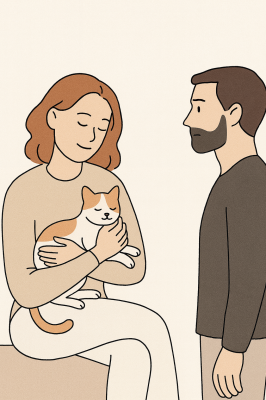
Why You Prefer Animals Over People: It’s Not a Personality Quirk — It’s a Nervous System Adaptation
Do you feel more comfortable with animals than with people?
Do you find yourself softening instantly around a dog, melting into the presence of a horse, or feeling seen by a cat in a way humans rarely offer?
If so, you’re not weird — and you’re definitely not broken.
What you’re experiencing isn’t a personality flaw.
It’s a nervous system adaptation rooted in your earliest relationships and emotional history.
Animals feel safe.
Humans often don’t — especially when your attachment wounds were formed long before you had the language to understand them.
This blog will help you understand why you feel this way, the science behind it, and how healing is absolutely possible.
The Truth: Preferring Animals Over People Is a Nervous System Pattern
You probably already know this on some level:
Animals are predictable.
People are not.
Animals don’t gaslight you.
They don’t judge you.
They don’t weaponize your emotions, ignore your needs, or drag you back into childhood roles you’ve outgrown.
When you’re with an animal, your nervous system receives pure cues of safety:
-
Soft eyes
-
Rhythmic breathing
-
Calm presence
-
Non-judgment
-
Consistent energy
-
Attunement without expectation (Attunement is the experience of someone truly “getting you” — noticing your feelings and meeting you with presence, not judgment.)
These are the exact cues humans are supposed to provide during your early attachment years.
If you didn’t get predictable attunement as a child — if love was conditional, inconsistent, unsafe, or explosive — your nervous system learned:
“Humans are dangerous. Animals are safe.”
That’s not a conscious belief.
It’s a somatic imprint — a learned protective response your body still carries.
Your Body Remembers What Your Mind Forgot
Attachment wounds form long before we have verbal memory.
Before the age of seven, the brain is in a deeply impressionable state, absorbing everything through sensation and emotion.
If your early environment taught you:
-
To stay small
-
To not upset anyone
-
To be the peacekeeper
-
To monitor moods
-
To fawn or over give (To fawn means you automatically people-please, smooth things over, or abandon your own needs in order to keep someone else happy and avoid conflict. It’s a survival response — just like fight, flight, or freeze — where your nervous system tries to create safety by being overly agreeable, helpful, or accommodating.)
-
That emotions weren’t welcomed
-
That love came with strings attached
— then your nervous system adjusted for survival.
Even if your adult mind says: “I’m fine. I had a normal childhood.”
Your body may still be operating on the old wiring:
“People are unpredictable. Connection is risky. Closeness requires performance.”
Animals never trigger that wiring.
Their presence communicates something your nervous system has been starving for:
“You can rest here.”
When a Parent Doesn’t Protect or Believe a Child
One of the deepest attachment injuries happens when a child goes to a parent for protection — and the parent minimizes, dismisses, or outright denies the child’s experience.
When a child says,
“I’m scared,”
“I don’t feel safe,”
“Something happened,”
or even shows signs of distress, and the parent does not respond, that child learns a devastating lesson:
“The people who are supposed to protect me… won’t.”
This moment becomes a blueprint for adulthood.
The nervous system encodes real-time survival messages:
-
People can’t be trusted.
-
My feelings don’t matter.
-
Love does not guarantee safety.
-
Speaking up leads to being ignored, blamed, or shamed.
-
I’m safer staying silent.
This isn’t dysfunction — it’s adaptation.
When the body remembers being unprotected, it automatically looks for relationships that won’t repeat that harm. And animals embody the exact qualities the wounded child never received:
-
Attunement
-
Predictability
-
Warmth
-
Responsiveness
-
Presence
Animals become the safest place in the world because they offer what humans failed to provide at a critical developmental moment.
So, when a parent doesn’t protect or believe a child, a wound remains open. And that wound becomes the lens through which future relationships are viewed.
“People aren’t safe.”
“People don’t believe me.”
“People hurt me.”
Your nervous system responds accordingly — by gravitating toward what feels emotionally secure, consistent, and trustworthy: animals.
Not because you’re broken… but because your body is brilliant at protecting you. Animals become the safest place in the world because they offer what humans failed to provide at a critical developmental moment.
Growing Up with an Abusive Sibling or an Alcoholic Parent
Not all wounds come from parents directly — sometimes they come from the home environment itself. Growing up with an abusive older sibling, a volatile family member, or an alcoholic parent creates a constant state of unpredictability. Your nervous system never knew what version of that person you would get: calm, explosive, manipulative, apologetic, or numb.
In homes like this, children learn early:
-
Stay small.
-
Stay quiet.
-
Stay out of the way.
-
Don’t trigger anything.
-
Scan the room before you enter.
-
Read everyone’s mood before you speak.
This becomes your survival strategy.
If a sibling was abusive, you learned that danger could come from someone your parents trusted. If a parent was alcoholic, you learned that love can be inconsistent, chaotic, or scary. And if no one intervened or protected you, your nervous system internalized the message:
“I’m on my own. No one is coming.”
Children raised in these environments frequently turn toward animals because animals offer what the home did not:
-
Predictability
-
Safety
-
Unconditional presence
-
Non-reactivity
-
Softness
-
Attunement
Animals never come home drunk.
They never switch moods without warning.
They never mock you, threaten you, or make you responsible for their chaos.
They never minimize the fear you lived with every day.
They simply show up — consistently, gently, and without agenda.
When you’ve lived in a home where you were constantly scanning for danger, your body becomes wired to expect it. Human relationships can feel exhausting because your subconscious is always bracing for the next emotional hit.
Animals, however, let your body finally exhale.
They give your nervous system a reference point of connection without fear — something you may have never had in your childhood home.
This isn’t an overreaction.
It’s not being dramatic.
It’s the result of living through relational harm without adequate protection.
The Science: Why Animals Regulate Your Nervous System
Animals naturally activate your ventral vagal state — the safety-and-connection branch of the nervous system. This is the state where you feel grounded, open, and emotionally regulated.
Here’s why animals are so soothing:
1. They offer co-regulation without pressure
Human relationships are often layered with expectations and emotional complexity. Animals co-regulate with simplicity and purity.
2. They create rhythmic patterns
A dog’s breathing, a cat’s purr, a horse’s presence — all of it brings your system into rhythm, which is extremely regulating.
3. There’s no emotional inconsistency
No mixed messages. No manipulation. No unpredictability. Just steady, honest energy.
4. You don’t need a mask
Animals let you exist without performing, pleasing, or shrinking yourself.
5. They bypass trauma defenses
Humans can activate survival responses — fight, flight, freeze, or fawn.
Animals rarely do. They invite your system into connection without fear.
If People Feel Draining to You, There’s a Wound Underneath
Most clients break down not because they prefer animals, but because they feel ashamed of it.
But that preference is a clue — a compass pointing straight toward the early attachment injury that shaped your nervous system.
Signs of an underlying relational wound include:
-
Feeling exhausted after socializing
-
Preferring one-on-one over groups
-
Difficulty trusting others
-
Withdrawing when someone gets close
-
Oversharing to avoid true vulnerability
-
Avoiding conflict
-
Feeling “too much” or “not enough”
-
Scanning people for danger cues
These aren’t personality traits.
They’re adaptations your younger self needed for safety.
“But My Childhood Was Fine…”
Clients often minimize their upbringing because:
-
they had food and a stable home
-
their parents weren’t outwardly abusive
-
they think others “had it worse”
-
they were told to “get over it”
But emotional neglect, inconsistency, or lack of protection leaves wounds that are just as real as any physical injury.
Children don’t need perfect parents.
They need safe, attuned, predictable ones.
If yours were distracted, overwhelmed, emotionally unavailable, reactive, or dismissive — your body stored that.
Animals give you the antidote: unconditional presence, consistency, and safety.
You’re Not Broken — You’re Protected
Your preference for animals over people is evidence of how intelligently your nervous system learned to protect you.
You adapted.
You survived.
You followed safety wherever you felt it.
And now, as an adult, you’re allowed to offer yourself something different.
You don’t need to force unsafe relationships.
You don’t need to “toughen up.”
You don’t need to fix yourself.
You simply get to learn what safe human connection actually feels like.
That skill is learnable.
Healing Is Absolutely Possible
Healing unfolds in gentle steps:
1. Regulate your own nervous system
Through breathwork, grounding, somatic tools, and consistent practice, your body learns safety from the inside out.
2. Rewrite attachment patterns
Through trauma-informed introspective work, the outdated story begins to shift:
“People hurt me,” becomes “Some people weren’t safe, but connection can be healing now.”
3. Experience Healthy Co-Regulation With Safe People
Most adults who prefer animals over people have only ever known unhealthy co-regulation — the kind that forces you to manage other people’s emotions to stay safe.
That wasn’t co-regulation. That was survival.
Unhealthy co-regulation looks like:
-
Becoming the calm one so others don’t explode
-
Walking on eggshells
-
Monitoring and managing other people’s reactions
-
Silencing your needs to keep the peace
-
People-pleasing, fawning, or over-functioning
-
Feeling responsible for another person’s emotional state
This is emotional caretaking — not connection.
But your nervous system was designed for something completely different.
Healthy co-regulation looks like:
-
Being in the presence of someone steady and grounded
-
Feeling your own body relax instead of brace
-
Being witnessed without being fixed
-
Feeling safe without having to perform
-
Staying connected without losing yourself
-
Breathing in a shared, natural rhythm
Healthy co-regulation isn’t dependency — it’s a corrective experience.
It teaches your body: “This is what safe connection feels like.”
And through repeated exposure to safe people, your system learns how to trust, soften, and regulate without abandoning yourself.
4. Build boundaries that honor your energy
Boundaries make human interactions predictable — which rebuilds trust and makes connection feel possible again.
5. Allow trust to grow slowly
Safe relationships aren’t sudden. They’re consistent, gentle, and earned over time.
A Final Word: Healing Doesn’t Mean Losing Your Love for Animals
Loving animals is not a trauma response — it’s a wisdom response.
It shows that your body knows the difference between threat and safety.
It shows that you value presence, gentleness, and authenticity.
It shows that your system remembers what real attunement feels like.
Healing doesn’t require you to love people more than animals.
It simply allows you to widen your circle of safety — at your pace — without abandoning the parts of you that learned how to survive.
You’re not broken.
You’re protected.
And protection is a powerful place to begin healing from.
If any part of this resonates with you, you don’t have to walk through this alone.
This is the work I do — helping people heal old wounds, regulate their nervous system, and finally feel safe in their own bodies again.
If you’re ready for support, reach out. I’m here to help.